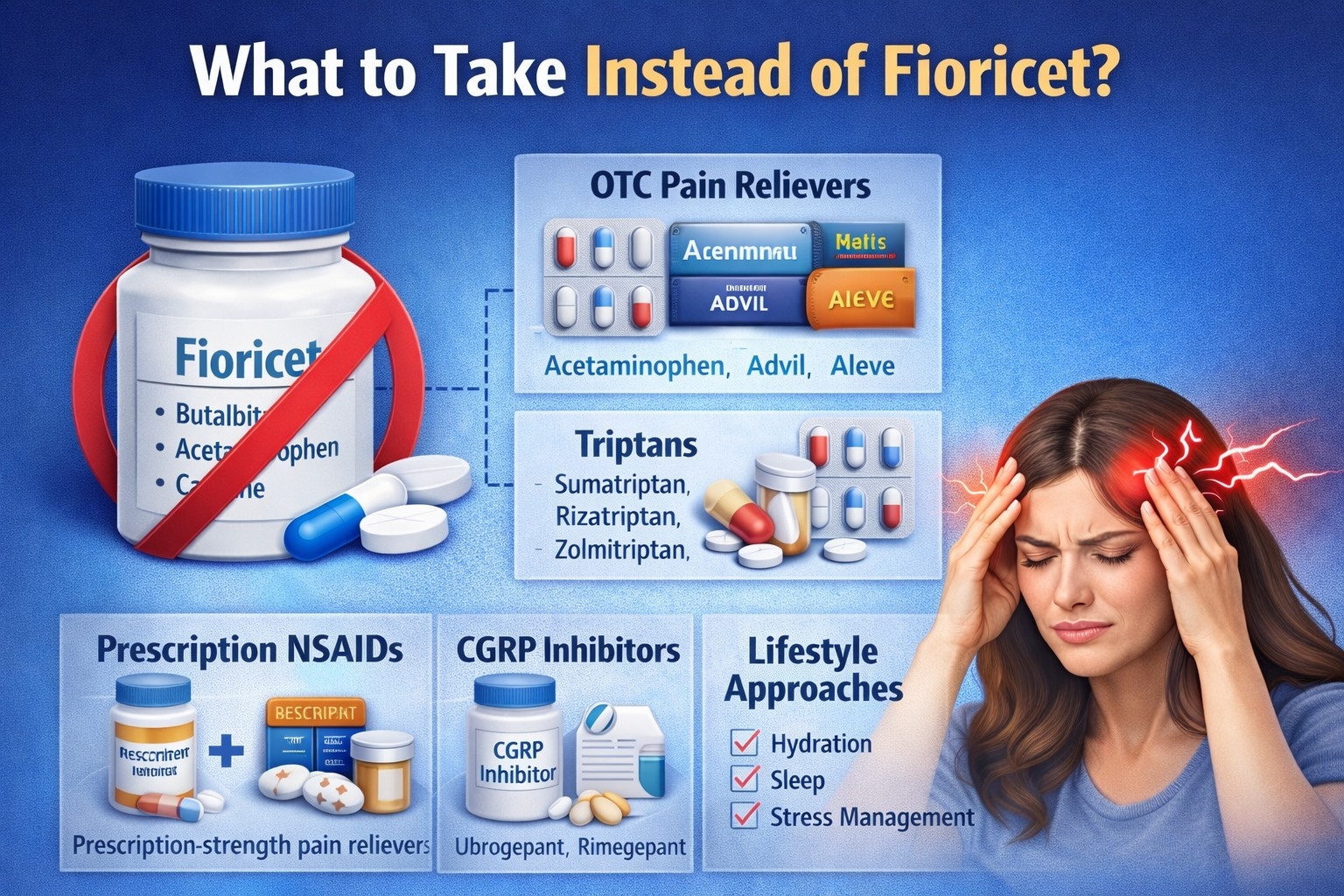
Fioricet is a prescription medication commonly used to treat tension headaches and sometimes migraines. It contains a combination of butalbital, acetaminophen, and caffeine, which work together to reduce pain and muscle tension. While Fioricet can be effective, it is not always the best option for everyone. Because it contains a barbiturate (butalbital), it may carry risks such as dependence or medication-overuse headaches.
If you’re wondering what to take instead of Fioricet, several alternatives—both prescription and over-the-counter—can help relieve headaches safely and effectively. The right choice depends on the type and severity of your headaches.
Why Some People Look for Alternatives to Fioricet
Doctors sometimes recommend alternatives to Fioricet because of its potential risks. Butalbital can be habit-forming and may lead to rebound headaches if used frequently. Additionally, many headache specialists prefer treatments that specifically target migraine or tension headache mechanisms.
Common reasons patients seek alternatives include:
- Risk of dependence
- Medication-overuse headaches
- Drowsiness or dizziness
- Doctor recommendations for safer long-term options
Fortunately, several effective alternatives are available.
1. Over-the-Counter Pain Relievers
For mild to moderate headaches, over-the-counter medications may provide sufficient relief. These medications are often the first line of treatment.
Common options include:
- Acetaminophen (Tylenol)
- Ibuprofen (Advil, Motrin)
- Naproxen (Aleve)
These drugs work by reducing inflammation and blocking pain signals. Many people find that these medications are effective for occasional tension headaches or mild migraines.
Some products also combine acetaminophen, aspirin, and caffeine, which can enhance pain relief for headaches.
2. Triptans for Migraine Relief
If you suffer from migraines, doctors may recommend triptans, which are specifically designed to treat migraine attacks.
Popular triptan medications include:
- Sumatriptan
- Rizatriptan
- Zolmitriptan
Triptans work by narrowing blood vessels in the brain and blocking pain pathways associated with migraines. Unlike Fioricet, these medications target migraine mechanisms directly, making them more effective for many migraine sufferers.
3. Prescription NSAIDs
When over-the-counter medications are not strong enough, doctors may prescribe stronger nonsteroidal anti-inflammatory drugs (NSAIDs).
These medications reduce inflammation and help relieve headache pain. Prescription-strength NSAIDs may be recommended for patients with frequent headaches who need stronger relief without using barbiturate-containing medications like Fioricet.
4. CGRP Inhibitors
One of the newest classes of migraine medications includes CGRP inhibitors. These drugs work by blocking a protein involved in migraine attacks.
Examples include:
- Ubrogepant
- Rimegepant
- Atogepant
These medications are often used for patients who do not respond well to traditional migraine treatments. CGRP inhibitors can be used for both migraine treatment and prevention.
5. Preventive Migraine Medications
If headaches occur frequently, doctors may recommend preventive medications instead of treating each headache individually.
Common preventive treatments include:
- Beta blockers
- Certain antidepressants
- Anti-seizure medications
- CGRP monoclonal antibodies
These medications reduce the frequency and severity of headaches over time.
Lifestyle and Natural Alternatives
In addition to medications, some lifestyle strategies may help reduce headaches and migraines.
Helpful approaches include:
- Staying well hydrated
- Getting enough sleep
- Managing stress
- Avoiding known headache triggers
- Practicing relaxation techniques or yoga
Supplements such as magnesium, riboflavin (vitamin B2), and coenzyme Q10 may also help prevent migraines for some people.
When to Talk to a Doctor
If you are considering alternatives to Fioricet, it’s important to consult a healthcare professional first. Your doctor can evaluate your symptoms and recommend the safest and most effective treatment.
You should seek medical advice if:
- Headaches occur frequently
- Pain becomes severe or unusual
- Over-the-counter medications stop working
- You rely on headache medication multiple times per week
Proper diagnosis can help determine whether you are experiencing tension headaches, migraines, or another type of headache.
Final Thoughts
If you’re asking what to take instead of Fioricet, several alternatives may work better depending on your condition. Over-the-counter pain relievers, triptans, prescription NSAIDs, and newer migraine medications like CGRP inhibitors can all provide effective headache relief.
Because Fioricet contains a barbiturate that can lead to dependence, many healthcare providers recommend safer options whenever possible. Working with your doctor can help you find the most appropriate treatment and manage headaches more effectively.